Acoustics in the Office – Checklist: Walls, Ceilings & Screens
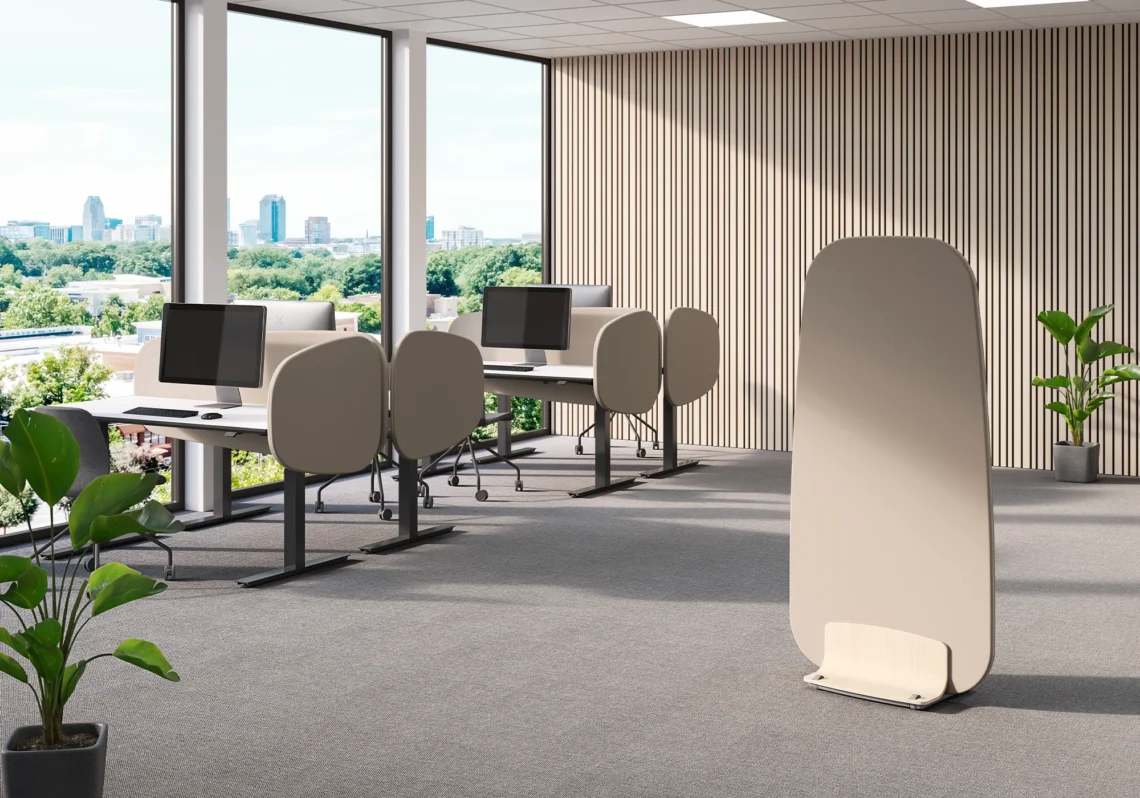
Poor acoustics is one of the most common complaints in modern offices. Open-plan layouts, hard surfaces, and high ceilings create a sound environment that breaks concentration, pushes up stress levels, and drags down productivity. This checklist is a practical way to work through the acoustic problems in your office, one surface at a time.
Why acoustics matter
Research shows background noise can cut cognitive performance by up to 66% on complex tasks. That number helps explain why people wearing headphones all day isn’t just about focus music – it’s damage control. Speech privacy matters too: the feeling that your conversation can’t be overheard by the person two metres away is a bigger factor in wellbeing and job satisfaction than most people expect.
Acoustic comfort comes down to three parameters: reverberation time (RT60), background noise level (dB), and speech intelligibility (STI). Get those three under control and most offices become significantly more pleasant to work in.
Walls
Bare plasterboard walls and glass partitions are some of the most reflective surfaces in an office. If you’re dealing with a loud space, the walls are usually a big part of the reason.
What to check and address
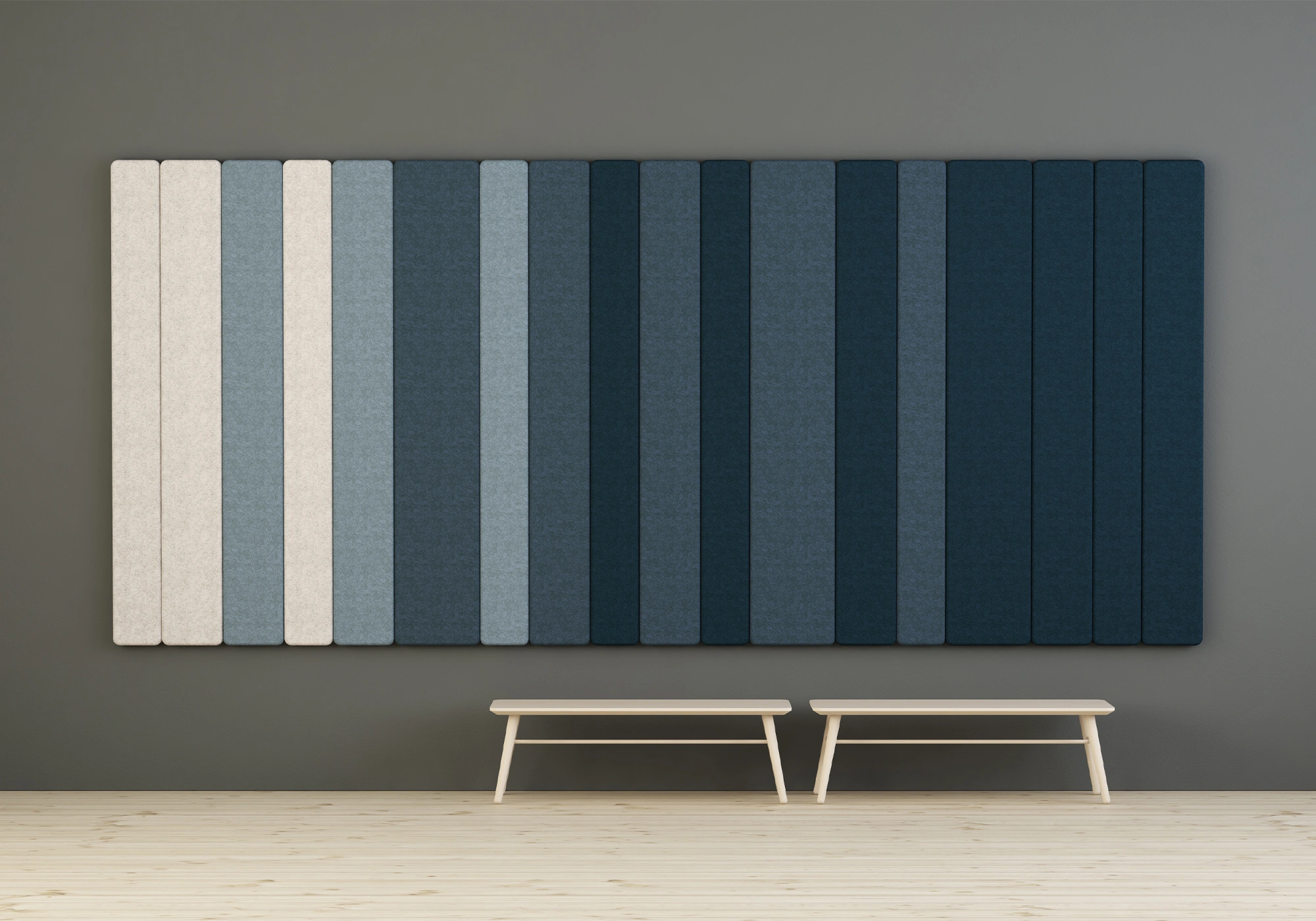
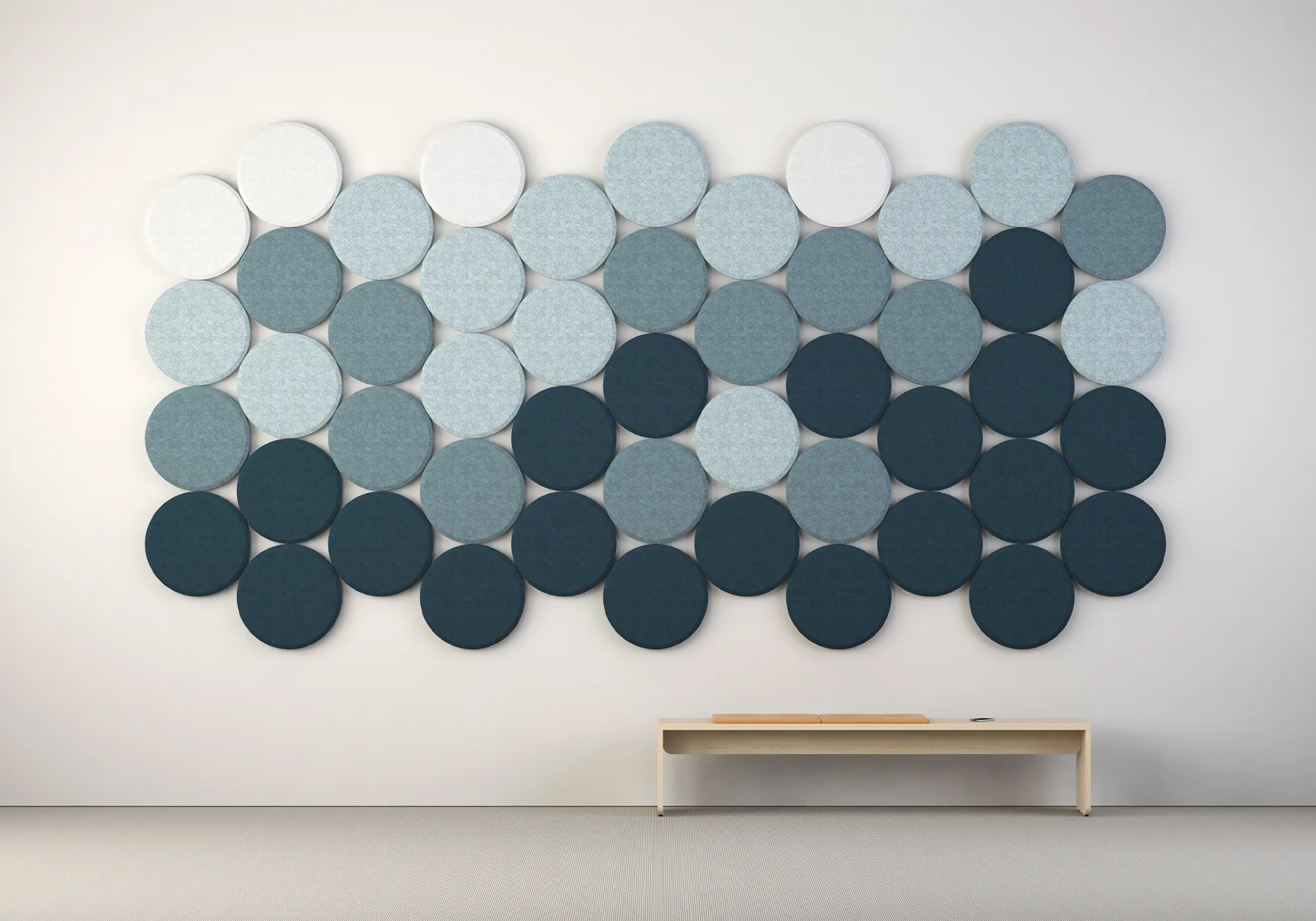
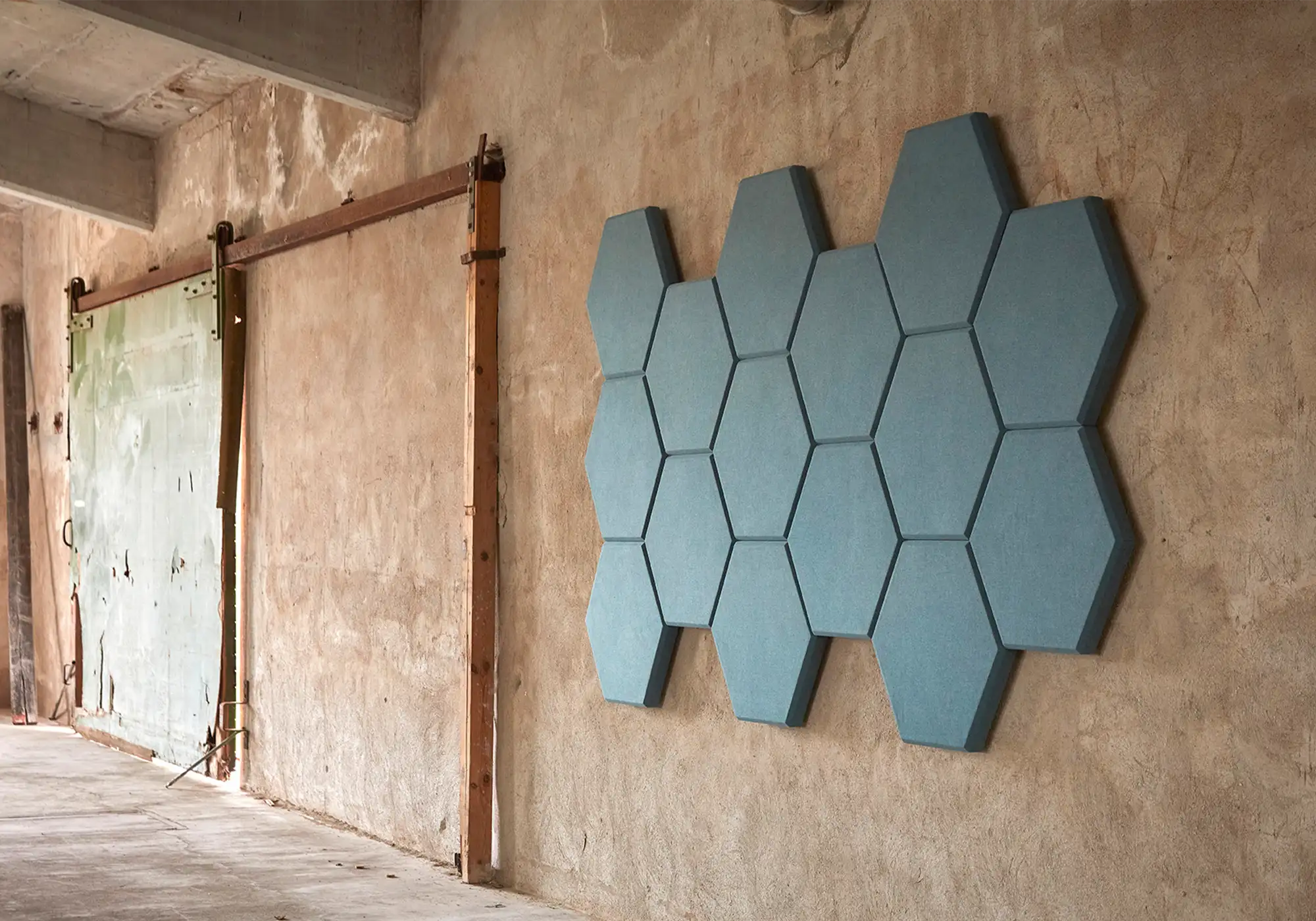
- Measure the total reflective wall surface (sqm). Bare plasterboard and glass walls are strongly reflective.
- Look for parallel wall surfaces that create standing waves and flutter echo – this is most common in rectangular meeting rooms.
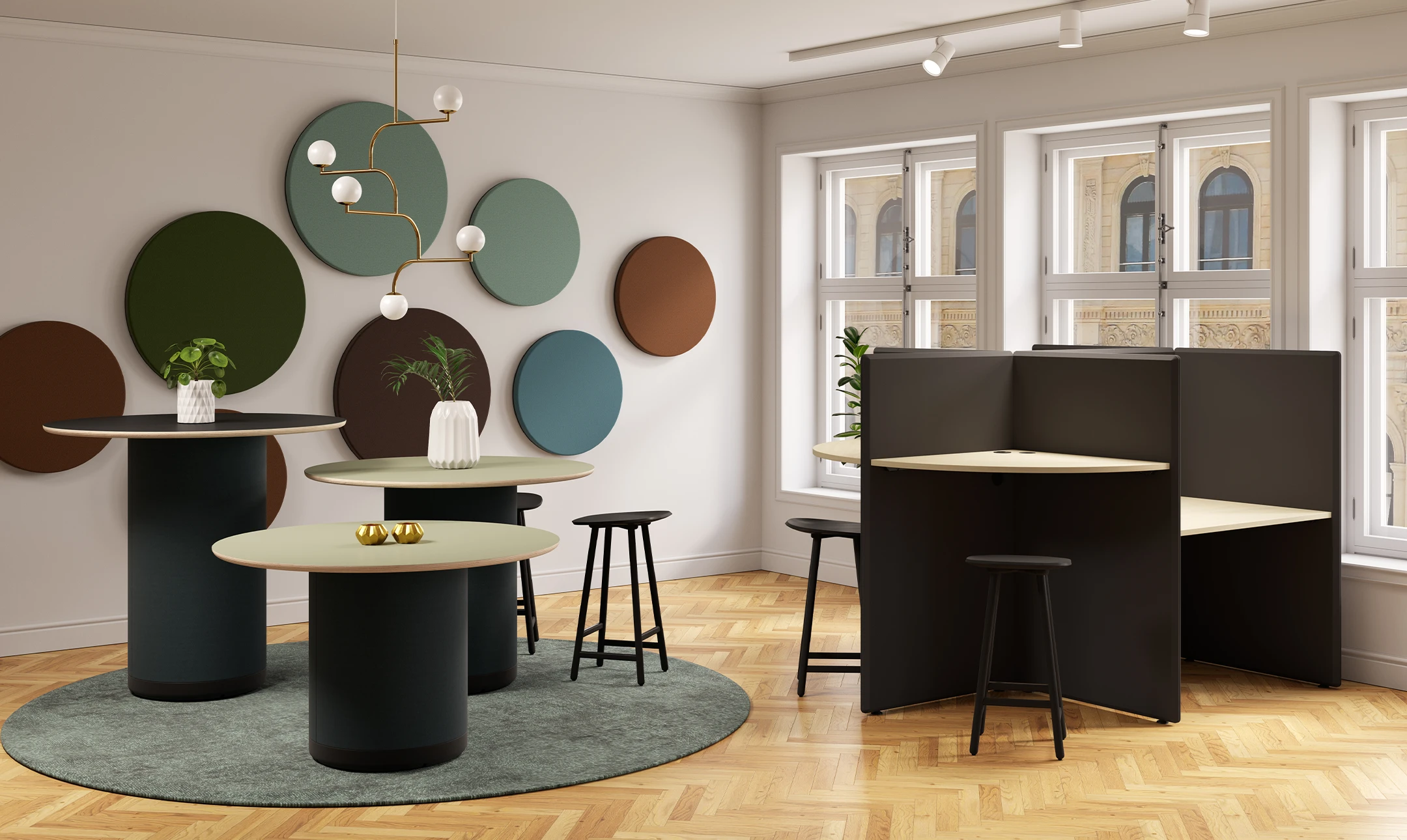
- Place wall absorbers on at least 20–30% of total wall area for a baseline improvement.
- Prioritise the walls closest to workstations that need concentration – not the back wall of a storage room.
- In small rooms, combine absorbing and diffusing products rather than using absorption alone. Pure absorption in a small space can sound dead and unnatural.
- Check that wall-mounted absorbers cover the 500–2,000 Hz frequency range. That’s the band that matters most for speech intelligibility.
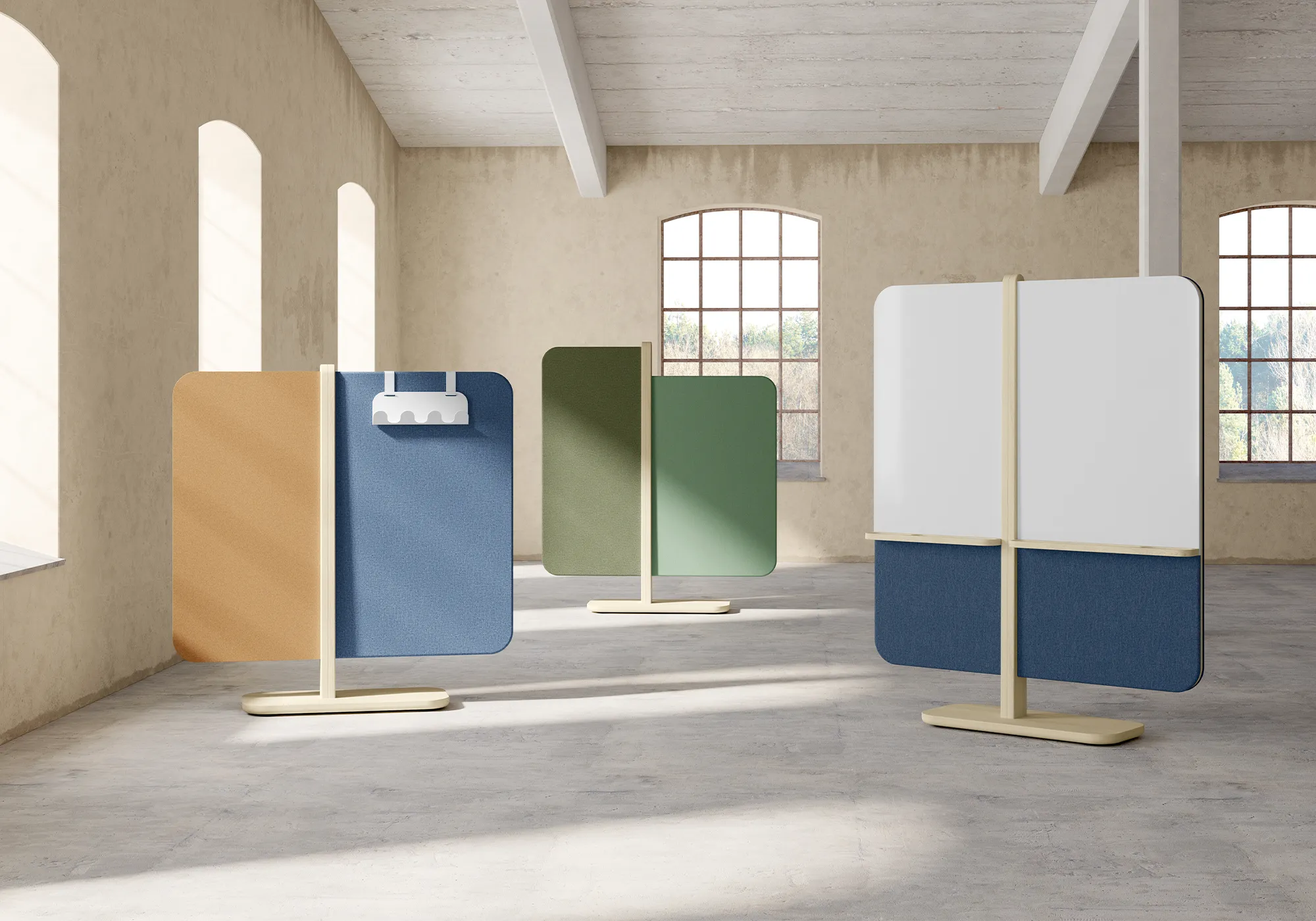
- Use floor screens or desk screens as a supplement to fixed wall panels in flexible open-plan layouts.
- Make sure absorbers start at least 1.2 metres above the floor – anything lower misses the primary sound level at seated height.
Ceiling
The ceiling is often the surface that delivers the most acoustic impact per square metre. Sound travels horizontally and bounces off the ceiling, spreading noise across the whole space. It’s usually the best place to start.
What to check and address
- Check whether the existing ceiling tiles are actually acoustic (mineral wool) or purely decorative. The difference in absorption is significant and isn’t always obvious from looking at them.
- Calculate the room volume (m³) and compare it with the recommended absorption area (m² Sabin) for offices. The target reverberation time is 0.4–0.6 seconds.
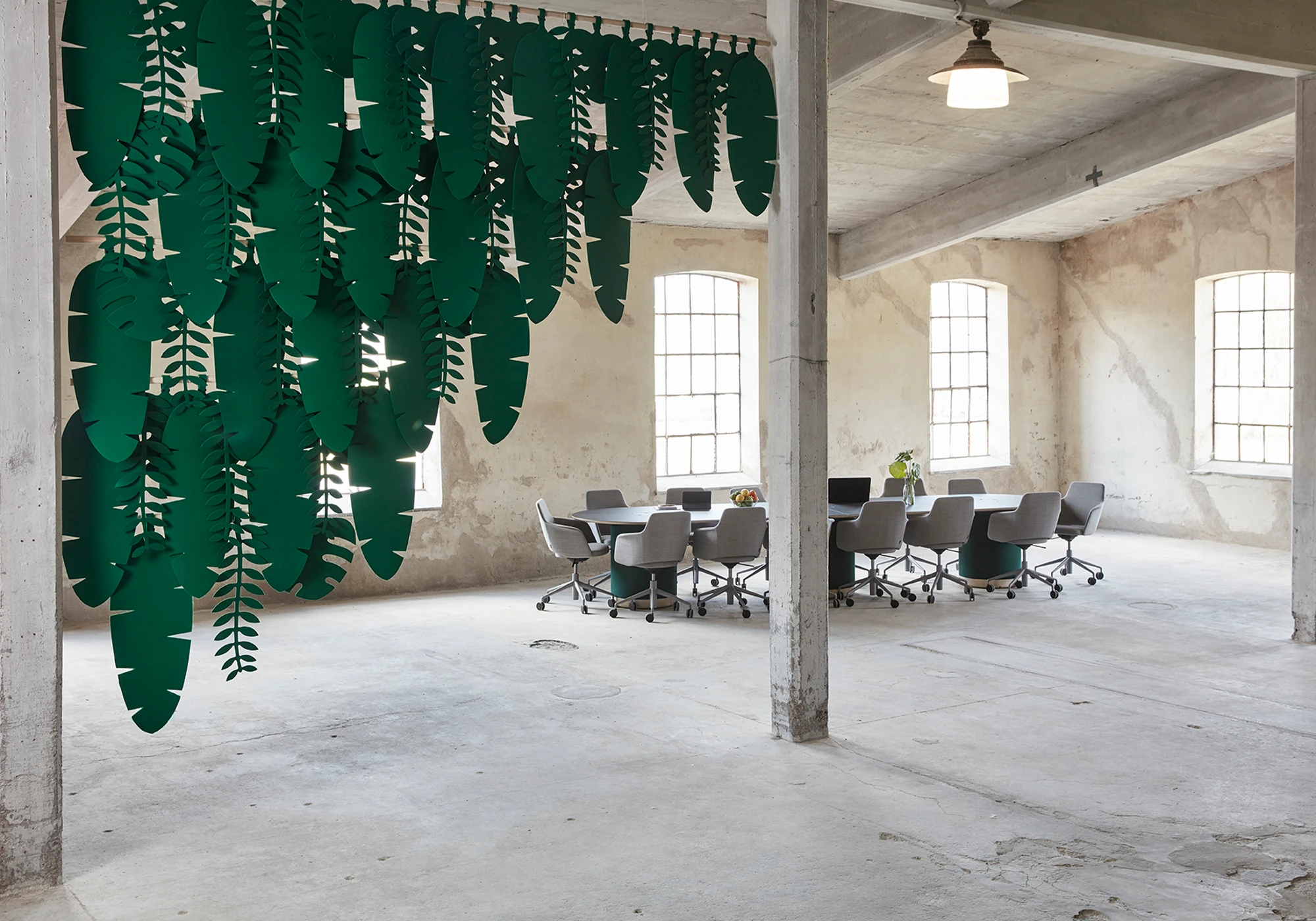
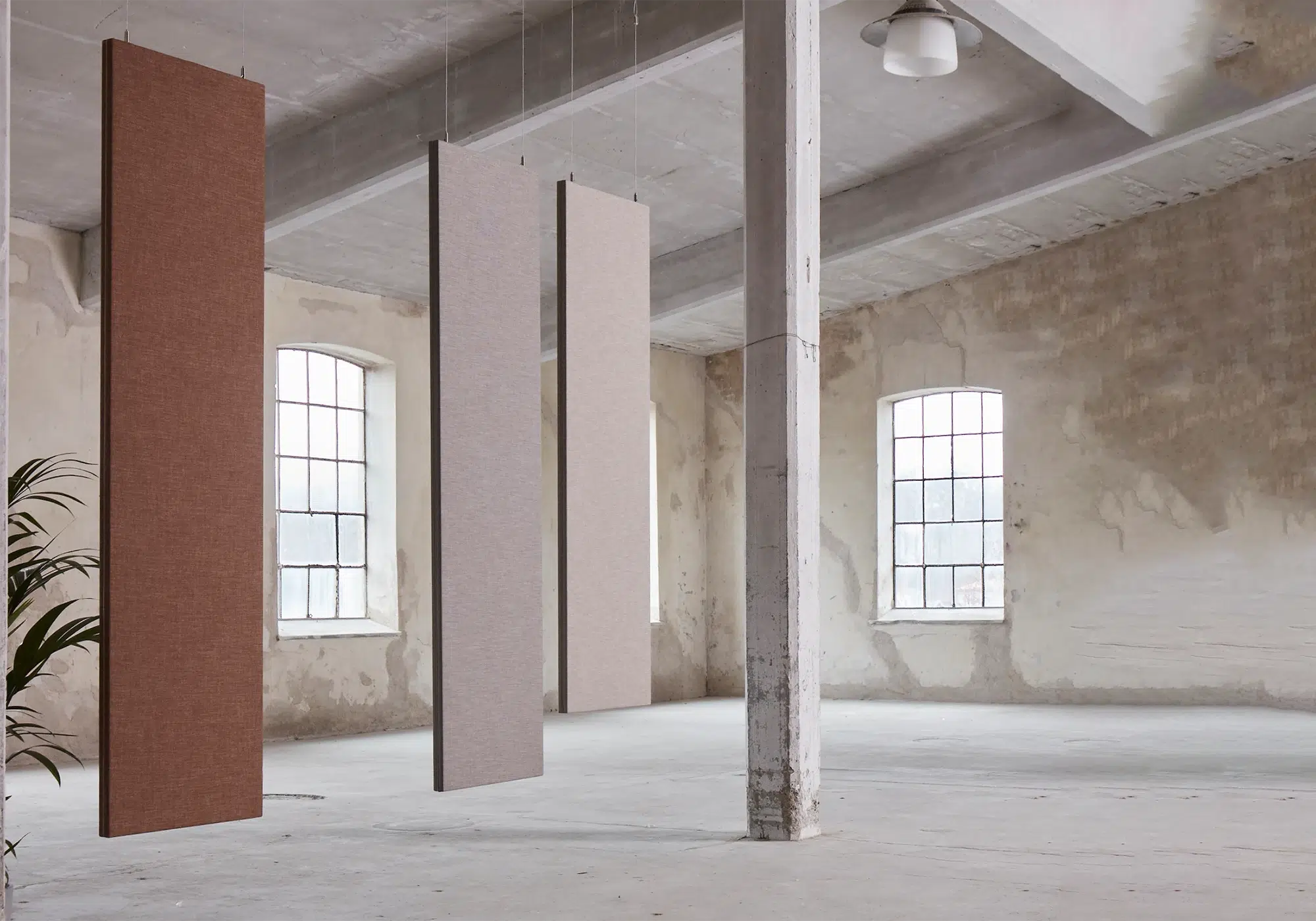
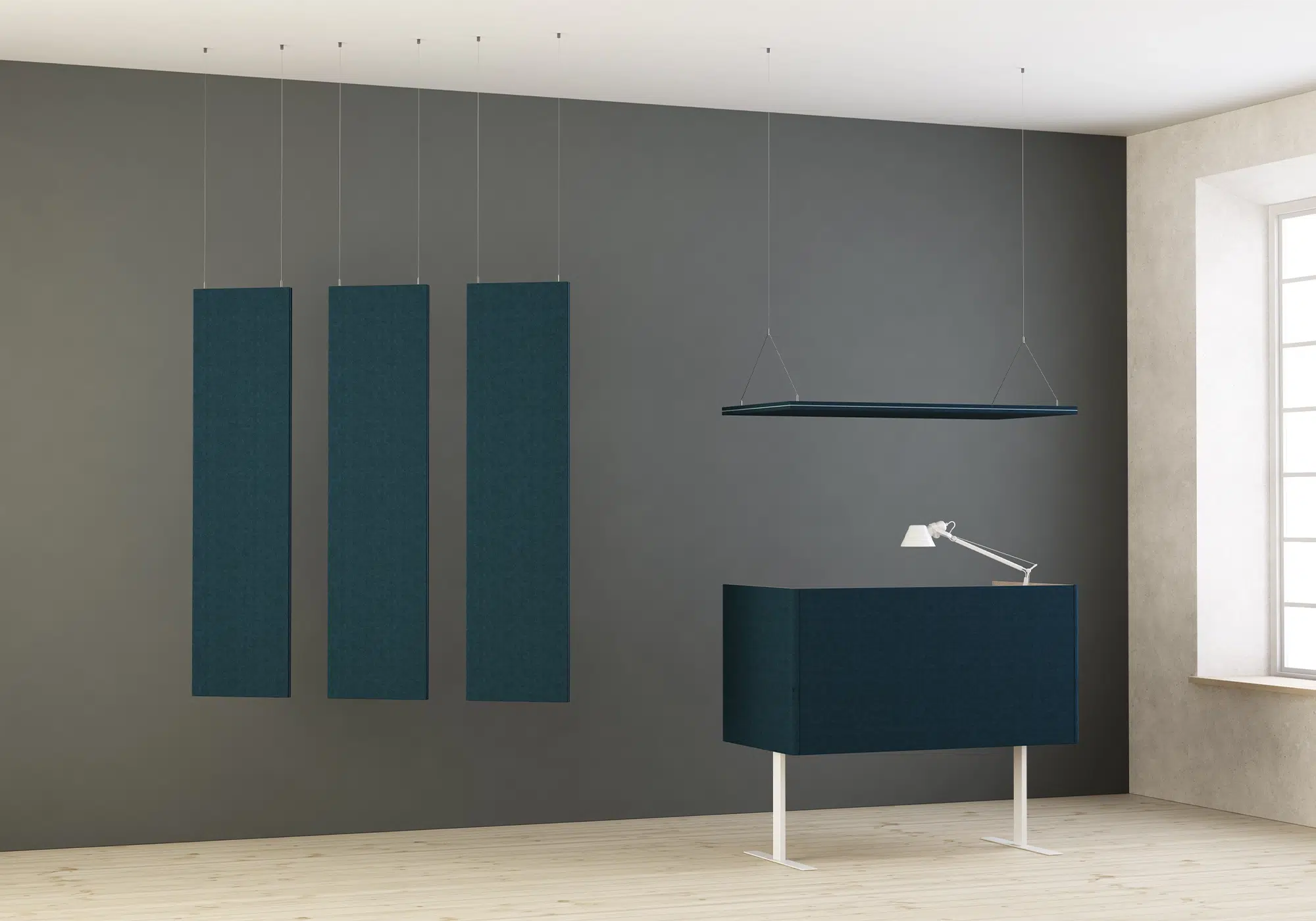
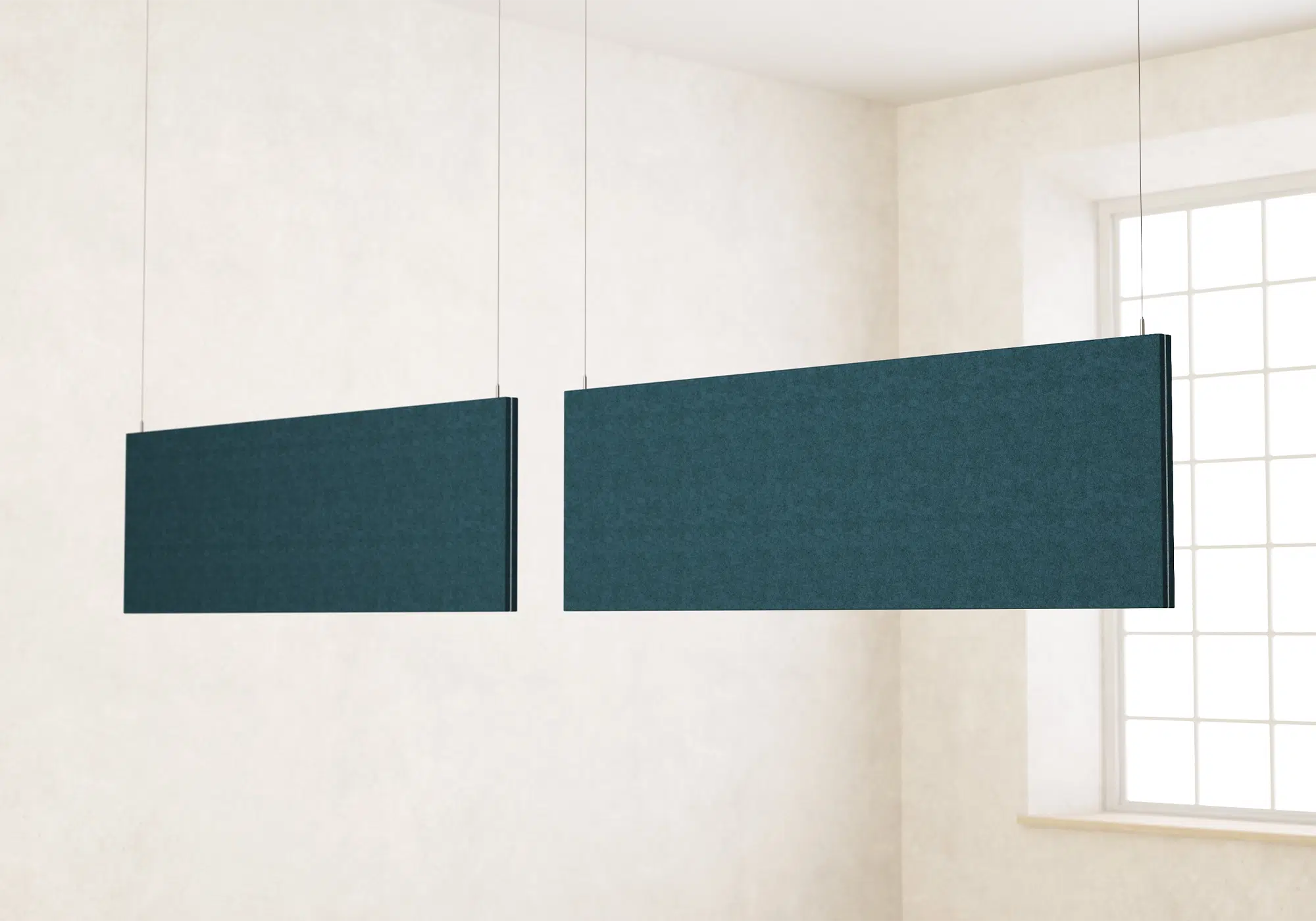
- In open areas without a suspended ceiling, use hanging acoustic panels (baffles). They’re effective and easy to reposition if the office layout changes.
- Put ceiling absorbers above the areas with the most speech: call centres, open-plan desks, reception areas.
- Spread them evenly rather than clustering them in one corner. Even distribution makes a bigger difference than concentration.
- Make sure the installation meets fire class Bs1d0 (European standard). Check the product data sheet before ordering.
- Pair ceiling absorbers with wall panels for full coverage in highly reflective spaces.
Screens
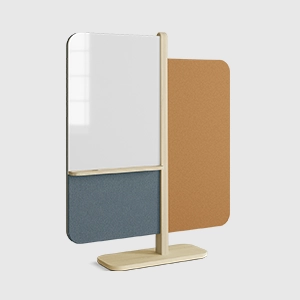
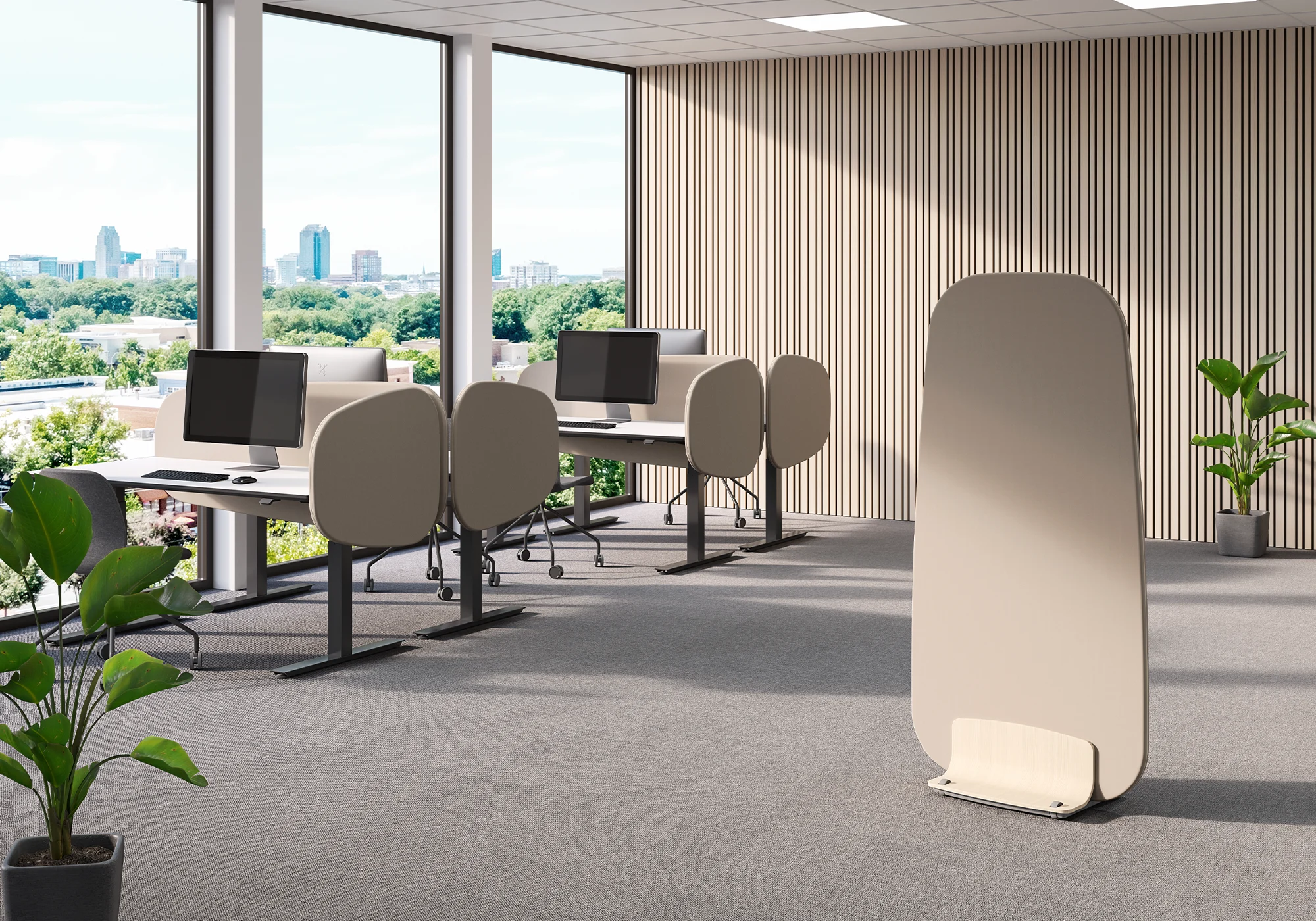
Desk screens and floor screens are the most flexible tool in office acoustics. They create local speech privacy and reduce direct sound transmission between workstations – no drilling, no permanent changes to the space.
What to check and address
- Find the workstations with the worst speech privacy. The benchmark: neighbouring conversations shouldn’t be clearly audible more than 4–5 metres away (D2,S ≥ 7).
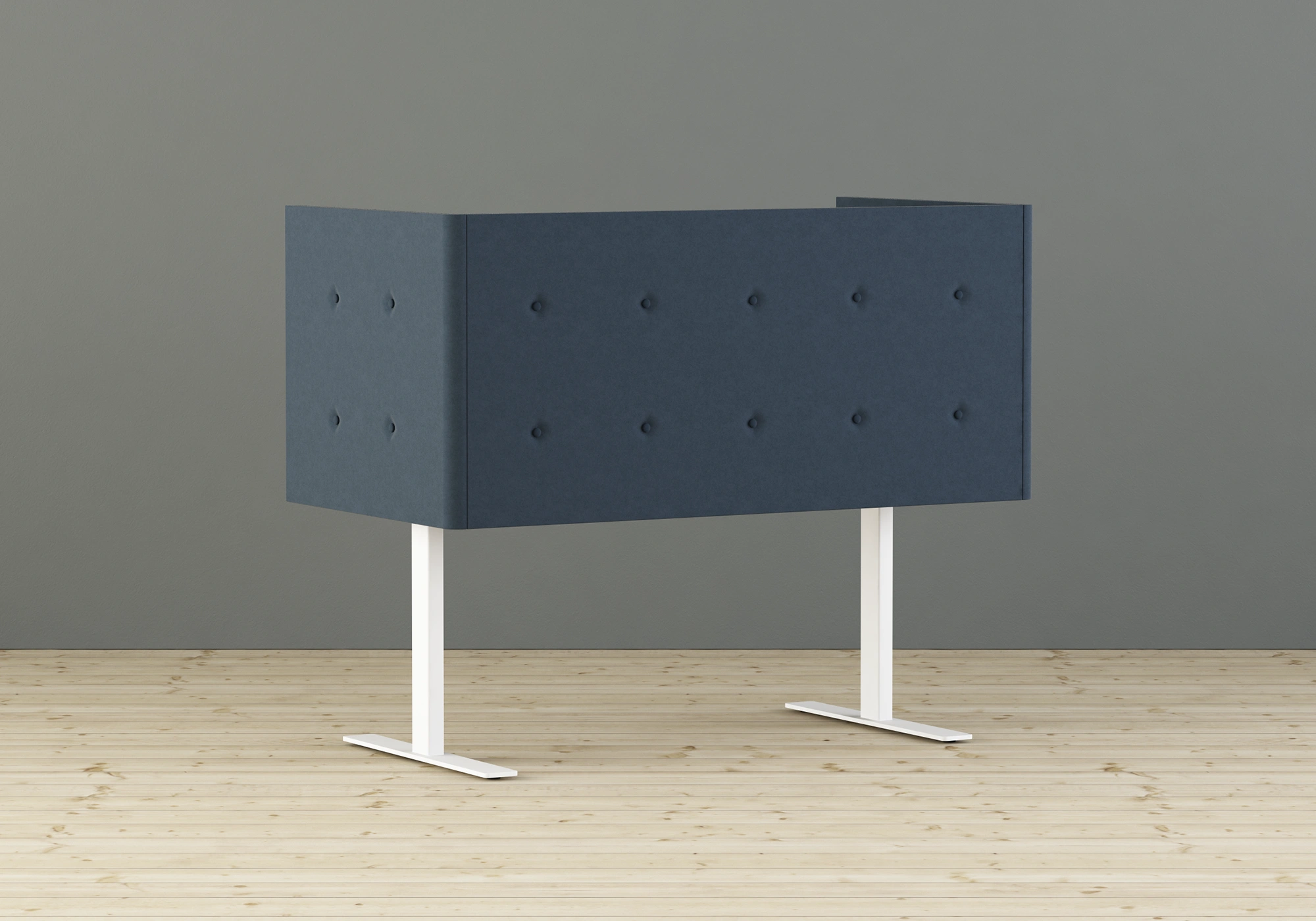
- Choose a desk screen at least 40 cm above the desk surface for basic protection at seated height.
- Check that the screen’s absorption coefficient (α) is ≥ 0.75 in the 500–2,000 Hz range. If the spec sheet doesn’t list this, that’s a warning sign.
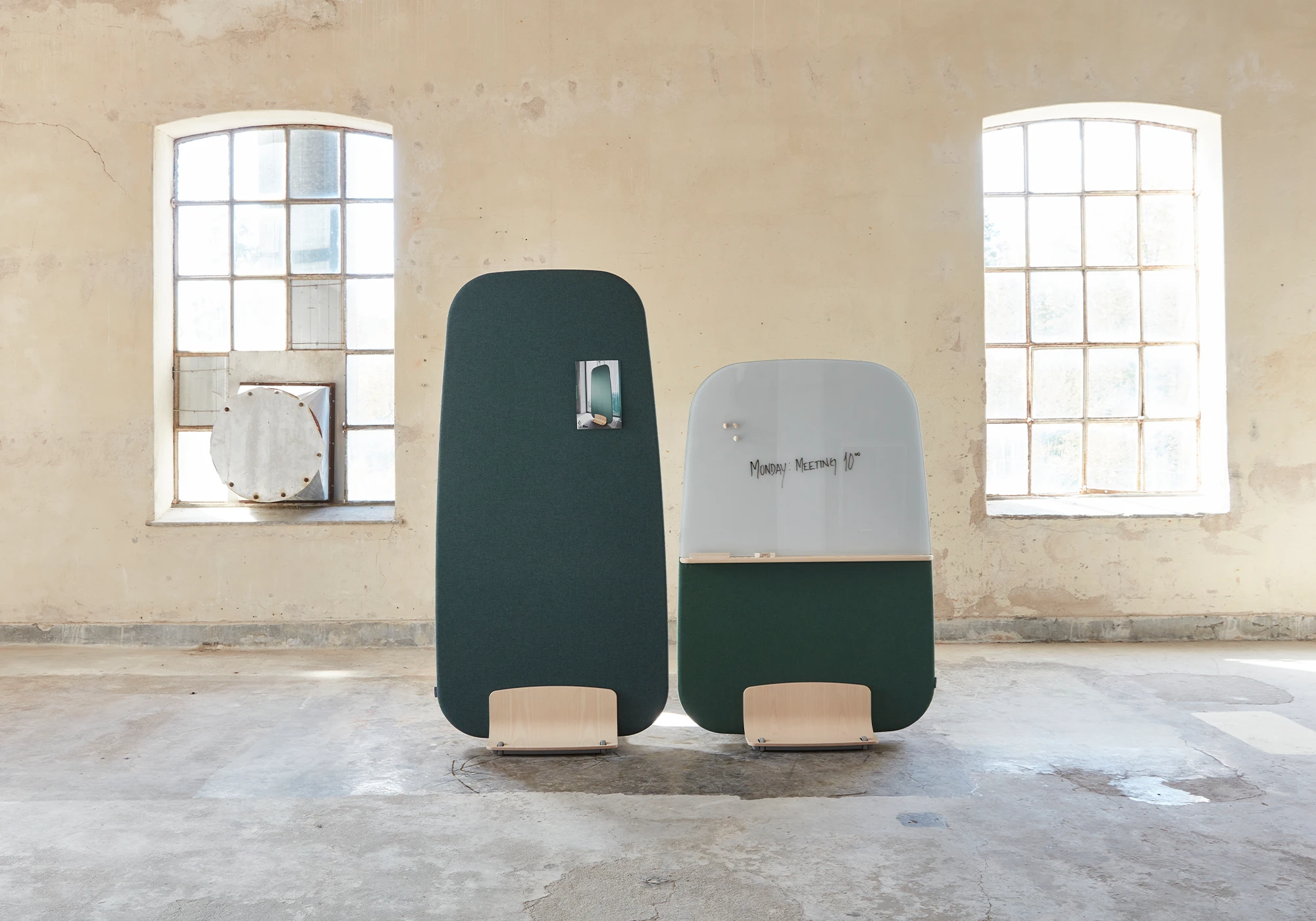
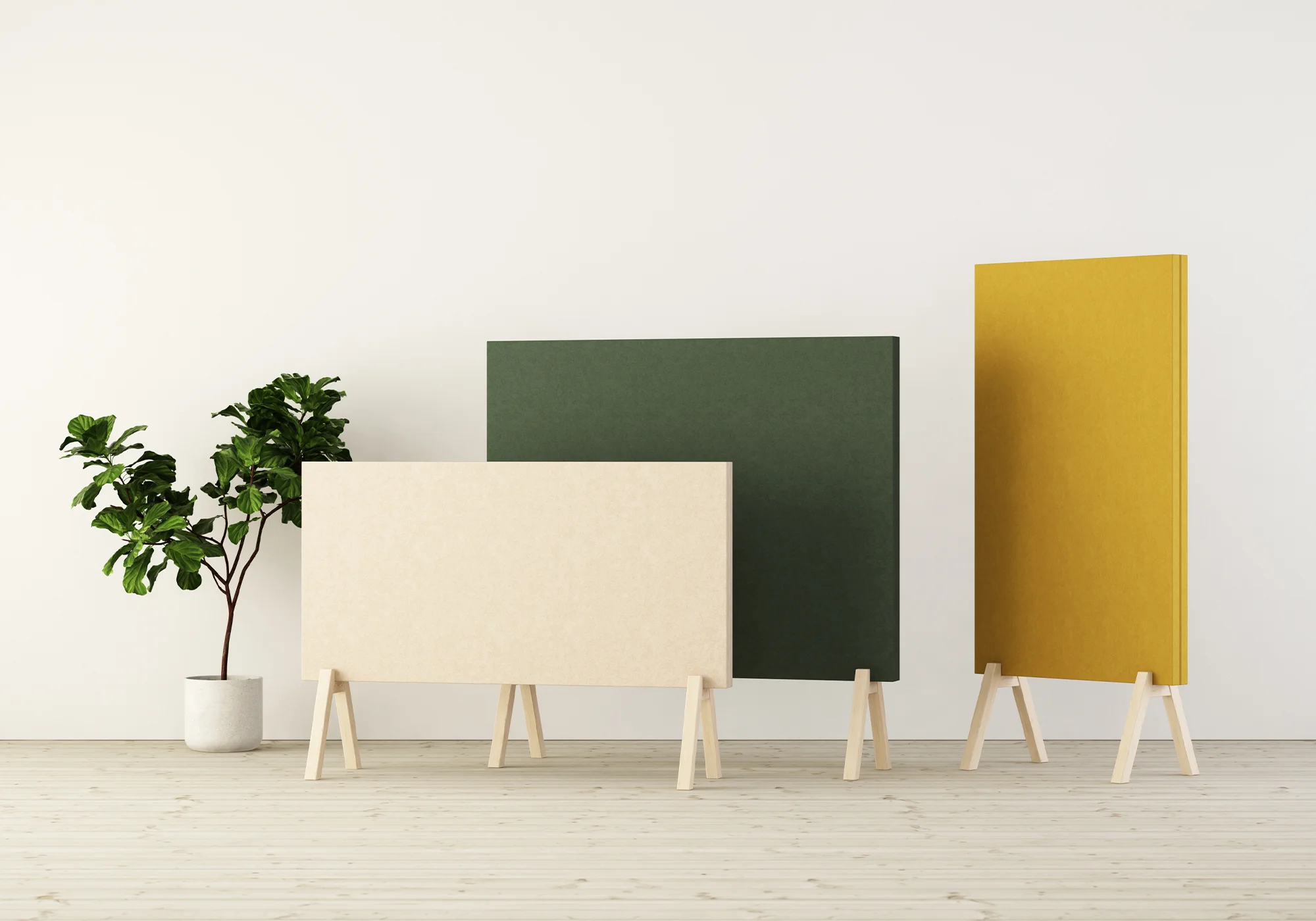
- Add floor screens in zones without fixed walls. A height of 150–180 cm covers standing conversations.
- Position floor screens perpendicular to the main noise source (open areas, walkways), not parallel to it.
- In rooms that are already heavily damped, consider screens that combine absorption and some reflection. Otherwise the space can feel unnaturally quiet and oddly oppressive.
- Don’t leave gaps in the screen arrangement. A gap covering 20% of the surface can reduce effectiveness by up to 50%.
- Include transparent sections (glass or acrylic with acoustic fill) where natural light needs to get through.
Action priority
If you’re not sure where to start, this is the order that delivers the most impact for most offices:
| Priority | Action | Primary effect | Product type |
|---|---|---|---|
|
1 |
Ceiling absorbers / baffles |
Reduces reverberation time across the whole space |
Ceiling panels, baffles |
|
2 |
Wall absorbers |
Reduces reflections and flutter echo |
Absorber panels |
|
3 |
Desk screens |
Local speech privacy at the workstation |
Desk screens |
|
4 |
Floor screens / partitions |
Zone separation and direct sound reduction |
Floor screens |
|
5 |
Combined package (wall + ceiling + screen) |
Complete acoustic comfort |
Package solution |
Common mistakes
- Treating acoustics as an aesthetic add-on rather than a functional requirement. Dimension it correctly from the start and you won’t be retrofitting fixes six months later.
- Putting all absorbers on a single surface. Even distribution across walls and ceiling almost always outperforms a concentrated solution in one spot.
- Choosing products with low absorption values (α) because they look good. Always check the data sheet – visual appeal and acoustic performance are separate things.
- Overlooking low-frequency problems below 250 Hz. Bass requires thicker absorbing material, and standard acoustic panels often don’t touch it.
- Underestimating soft surfaces. Rugs, curtains, and upholstered furniture absorb sound too – they’re not a replacement for acoustic products, but they’re a useful complement.
Products from Glimakra of Sweden
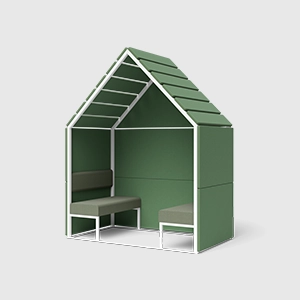
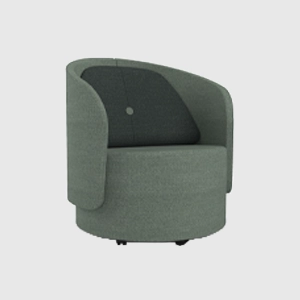
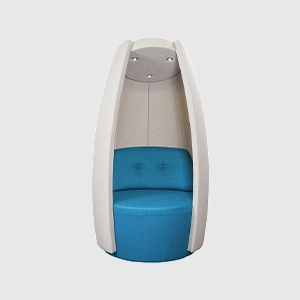
Glimakra of Sweden makes a full range of acoustic products for office environments: desk screens, floor screens, wall absorbers, and ceiling absorbers. Everything is manufactured in Sweden and meets the relevant standards for fire safety, durability, and acoustic performance.