
Desk screens
A desk screen is one of the most effective ways to create calm and concentration in an open-plan office. The right desk screen reduces distracting noise, cuts down on visual interruptions, and gives each person a clear sense of their own workspace, without closing off the room or creating barriers between people. Glimåkra of Sweden designs and manufactures desk screens with strong acoustic performance and a shape that feels like a natural part of the office rather than something bolted on as an afterthought.


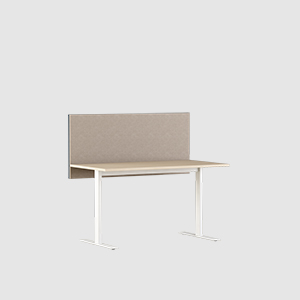


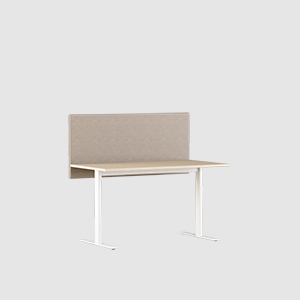

The Role of a Desk Screen in the Open-Plan Office
Open-plan offices are built around collaboration, quick conversations and flexible workstations. Those same qualities, movement, noise, activity in your peripheral vision, are also the most common reasons people struggle to focus during the day. A desk screen placed directly on the desk addresses the problem at source, between the people. The difference shows up in three ways.
- Acoustic absorption. A fabric-covered, absorptive desk screen (sometimes called an acoustic screen) catches direct sound from conversation and keyboard noise before it carries across the room. The effect is most noticeable where desks are close together or face each other.
- Visual calm. The screen creates a clear boundary between workstations and removes movement from your peripheral vision, making it easier to concentrate during focused work or video calls.
- A sense of space. A desk screen signals where your workstation begins and ends. In activity-based environments or offices with a clean-desk policy, it also works as a quick way of marking a desk as in use.
A desk screen rarely solves everything on its own, but it’s the most cost-effective starting point. Combined with floor screens, acoustic ceiling panels or wall absorbers, you can build a complete acoustic solution step by step.
Checklist: Choosing the Right Desk Screen
Before settling on a model or size, run through these four factors. They cover what determines whether a screen will actually do the job on your desks.
- Size and height. Height determines the degree of separation. Around 40–50 cm gives visual privacy for seated work and is enough to catch direct sound between desks. Taller screens (60 cm and above) are worth considering where desks face each other, or where height-adjustable desks need screening at their standing height too. Width should match the desk or the area you want to cover. Err on the wider side rather than the narrower.
- Check the thickness and edge profile of your desktop. Most desk screens clamp to panel thicknesses between 15 and 40 mm, but height-adjustable desks and desks with a cable tray sometimes need specific fittings. Choose between front mounting (on the front edge), top mounting (on the surface) or between-desk mounting depending on how the workstations are arranged.
- Material and acoustic performance. For proper sound absorption the screen needs a soft, padded core, not a hard surface. Inside sits an absorptive filling, usually polyester foam, which captures sound. The outer cover is fabric, and the choice matters: wool is the most acoustically active option and adds a warm, textile quality. Recycled polyester is a common alternative with a lower environmental footprint. Hard, smooth screens reflect sound and give visual separation only.
- Colour and appearance. A desk screen occupies a large visual area in a room. Choose a colour that works alongside the other textiles, rugs and acoustic elements in the space. A consistent colour palette ties an office together rather than fragmenting it. Consider the lightness of the shade (so the screen doesn’t create a dark wall at the desk) and how the colour reads against the desktop itself.
Products Worth Knowing
Limbus Original – the Versatile Classic
Limbus Original is Glimåkra of Sweden’s best-selling screen range and the foundation of the desk screen collection. It’s built around an absorptive core that delivers strong acoustic performance in a clean, simple shape that fits most office environments, from traditional workplaces to activity-based offices. Limbus Original comes in a wide range of sizes, fabric coverings and colours, so it adapts easily to specific desks and to existing interiors. The series has matching floor screens and room dividers, making it straightforward to build a consistent acoustic solution across an entire space in the same visual language.
Limbus Original works especially well when you need a reliable, low-maintenance desk screen in larger quantities, for example when rolling out across an entire office or equipping multiple floors to the same standard.
Arrow – Acoustic Performance with a Distinct Shape
Arrow is Glimåkra of Sweden’s desk screen for spaces where aesthetics and acoustic function need to work together. At 50 mm thick with dense filling, it maximises sound absorption while keeping weight down. The tapered profile with gently rounded corners creates natural joins where multiple screens meet, and the shape reads clearly even from a distance in an open-plan layout. Arrow suits environments where the office design is part of the brand identity and where you want the workspace to feel considered: headquarters, showroom-style offices, or spaces that receive visitors in the open plan.
Both Limbus Original and Arrow come in several mounting variants and fabrics. Exact dimensions, mounting types and all available colours are in the product listings below.
Frequently Asked Questions About Desk Screens
Most Glimakra of Sweden desk screens come with desk clamps that fix to the underside or front edge of the desktop. No tools are needed and there’s no drilling involved. Check the panel thickness of your desk before ordering: the clamps fit most standard panels between 15 and 40 mm. Height-adjustable desks or desks with a cable tray may need alternative fittings, which are noted on the individual product pages.
Desk screens fit the great majority of desks found in typical office environments, including height-adjustable models. The key factors are panel thickness, edge profile and whether there’s a clear edge to clamp onto. If you’re unsure, get in touch with a photo and the measurements and we’ll help you choose the right mounting type and size.
It depends on the screen’s construction, size and position. A fabric-covered, absorptive desk screen placed between two desks catches direct sound, mainly speech and keyboard noise, before it reaches the person next to you. Combined with floor screens and acoustic treatment on ceilings or walls, the perceived noise level in an open-plan office can drop considerably. A full acoustic measurement should be done room by room if you need precise figures.
Fabric-covered desk screens can be vacuumed regularly with a soft attachment. For marks, start with lukewarm water and a soft, well-wrung cloth. Avoid harsh cleaning products and don’t soak the fabric. For deeper cleaning or discolouration, care instructions are available for each fabric type. Get in touch if the covering needs to be replaced entirely.
Yes. A desk screen is one component in a broader acoustic setup. Pair it with floor screens for larger zones, with acoustic ceiling panels or wall absorbers to reduce overall reverberation, and with room dividers where entire areas need to be separated. Many desk screens in the range have matching products in the same shape and fabric, so the whole room carries a consistent visual line.
Start from the width of your desk and the separation you actually need. A screen shorter than the desk leaves a gap where both sound and sightlines come through. For height: around 40–50 cm for visual separation at seated working height, 60 cm or more where desks face each other or where users move between sitting and standing.
Next steps
Browse the range below to find the right desk screen for your workspace. If you need help choosing between models, sizes or mounting options, contact us and we’ll put together a recommendation for your desks and your space.
